

Between the Chic and Boutique: The Impacts of Urban Renewal and Gentrification in Edmonton
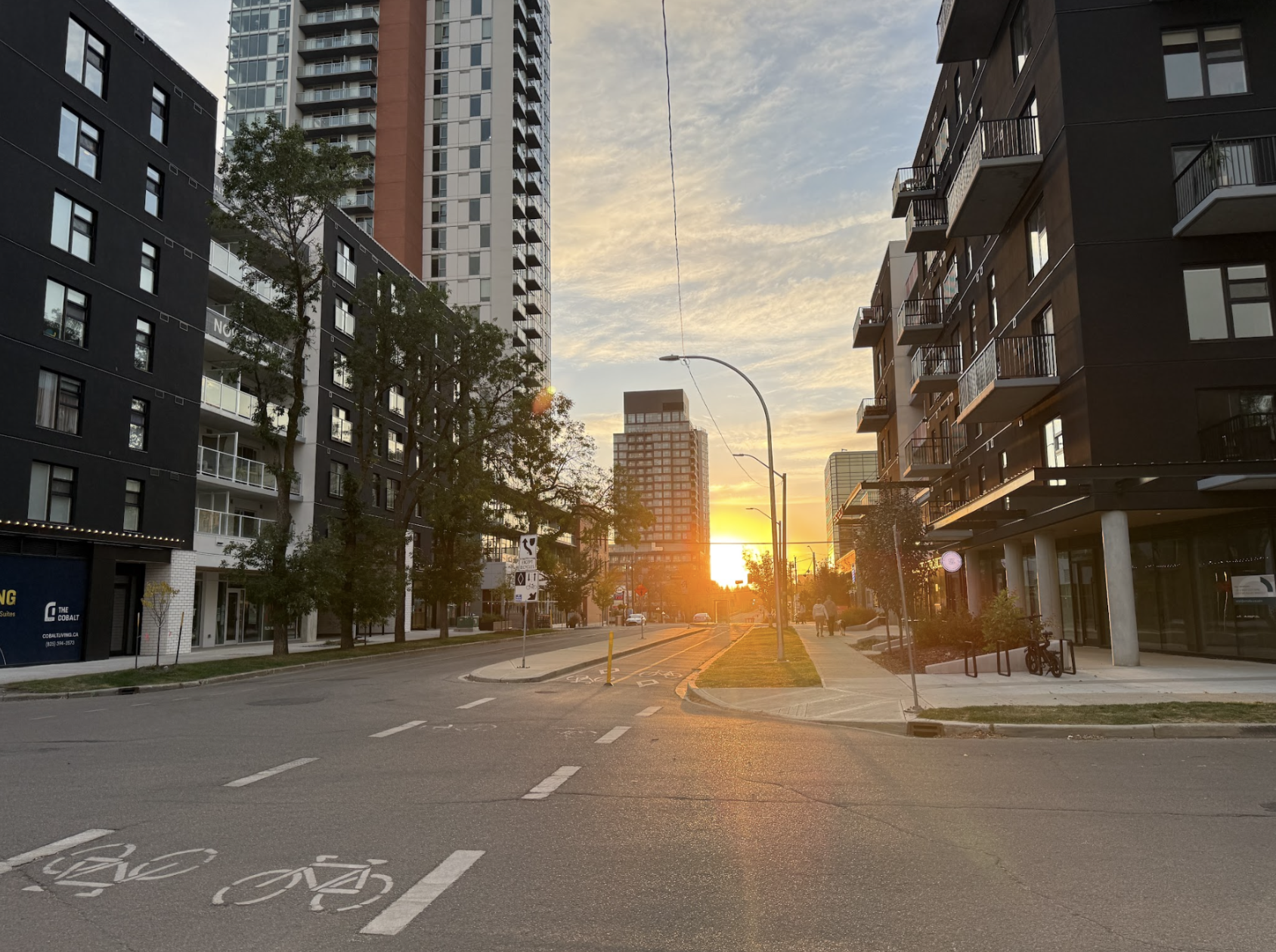
102nd Avenue NW looking West from 123rd Street NW. Picture by Luka Zvonkovic.
Wihkwentowin (formerly known as Oliver) is one of Edmonton’s oldest neighbourhoods. Located right beside Downtown, it has been an attractive option for those seeking a central-city lifestyle, without the excessive noise and bustle, for quite some time, and it’s not hard to understand why. In my view, it’s walkability, great transit access (soon to be made even better with the Valley Line LRT), and mixed-use nature all come together to make a pretty great place to live. Things weren’t always this way, however: what was once a working-class neighbourhood has changed greatly, with housing and services targeting a higher-income population quickly replacing older, more affordable housing stock and local businesses. As an Urban Planning student and frequent visitor of Wihkwentowin, I believe that understanding the positive and not-so-positive impacts of urban infill and renewal are crucial to reaching a healthy middle-ground. The way I see it, the central city should improve in ways that include all kinds of residents, not just those that can afford an $8 latte daily.
A block of tired 3-storey walk-up apartments on Jasper Avenue is replaced with a glass highrise and mixed-use podium. An unnecessarily wide collector road is replaced with a popular bike lane and narrow one-way street. A dilapidated phone exchange building is renovated to be a commercial centre with a coffee shop, brewery, bakery, ice cream parlour, boutique furniture store, and more. At first glance, these changes may incite a celebration for those who like urban places. Street-oriented, high-density residential buildings feel more fitting of a big city than older walk-ups with large front lawns, and new businesses work with new residential to generate more pedestrian activity, making everything feel more “alive” than before. What’s not to like about that? Well, it’d be hard to answer that question with just the street and exchange building examples in mind, but most urban projects don’t start with clean slates, as seen with the first example.
While not often pretty or “chic”, Wihkwentowin’s older residential buildings provide both affordable market housing and proximity to an affordable lifestyle. For example, with various frequent bus lines leading Downtown and to many other destinations, work and/or school are very accessible to residents here without having to pay for a car. Affordability, accessibility and nearby amenities are qualities that define Wihkwentowin, creating an environment where lower-income residents can achieve a high quality of life. The triple-A-threat, however, is also enticing for potential residents and private investors alike. Choose two options: An old bed and breakfast, small cafe, and chocolatier (all local)? Or a chain breakfast diner, interior design studio, and wine bar? The long-time residents of Wihkwentowin didn’t have a say when the former was replaced with the latter. Changing businesses are emblematic of a changing clientele, however, as a new urban-oriented creative and professional class replaces the long-time residents of the area.
Public investments also follow the money in this sense. New bike lanes and traffic calming infrastructure, a remade Jasper Avenue with wide tree-lined sidewalks, and the Valley Line LRT are key to making the area more attractive for urban residents and developers alike. Raised demand is often followed by raised rents and prices, often pushing lower-income residents away from good urbanism.
So, how could Wihkwentowin maintain a broad community with a range of incomes and lifestyles? Rent control measures would be the most effective option for keeping people in their current homes, with a level of government likely covering the rent difference. Publicly funded housing projects would likely be a more feasible option, however, as the City of Edmonton has undertaken various projects through the last decade. Policies discouraging the destruction of productive commercial buildings for prospective developments are also needed, as Wihkwentowin has struggled with a history of developers tearing down buildings and leaving empty lots in their wake.
Wihkwetowin has an unmistakable allure to it, especially for urbanists like myself. Its change is, in many ways, a model for what could be possible across Edmonton to improve housing and commercial density in a good, effective way. With that said, a range of resident backgrounds across class and profession is what often creates a vibrant social environment, and this neighbourhood has to ensure it doesn’t lose the range it already has.
Written by GAPSS VP Marketing Luka Zvonkovic