

Written by GAPSS VP Internal Logan Windebank
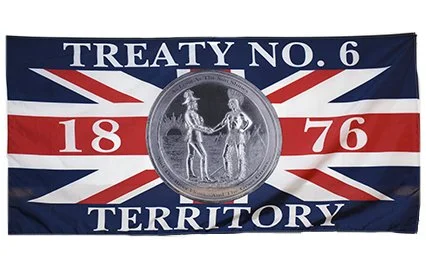
Treaty 6 Flag · Photo by Worrypower, 2019 · Wikimedia Commons · CC BY-SA 4.0
When students and teachers return to school after the break on January 4th, Alberta’s new Flag Display Regulation will be in effect for K-12 schools. Under legislation formerly known as Bill 25, it will restrict Indigenous flag displays and require government approval for displays outside the permitted categories (Alberta Education). Although I oppose these flag restrictions as a whole, I want to focus on the flags of Indigenous peoples whose relationships with this land began thousands of years before colonization.
Specified First Nations and Métis flags are permitted indoors on designated days, for ceremonies, and for certain visits. Curriculum-related flag displays are limited to 14 consecutive school days. The Vatican City flag, however, is permitted year-round. (Alberta Education). Given the Catholic Church’s historical involvement in operating residential schools, that stark contrast is especially troubling (Catholic Archdiocese of Edmonton). Why does Alberta’s government give the Vatican flag ongoing recognition while making Indigenous recognition conditional on the very lands these schools occupy?
The land we now call Alberta is home to diverse First Nations. These include the Blackfoot Confederacy (Siksika, Kainai, and Piikani) alongside Tsuut’ina and Îyârhe Nakoda in the south, and Cree, Saulteaux, Nakota, and different Dene peoples across central and northern territories (Elections Alberta). Alberta is also part of the Métis homeland; Métis nationhood developed through the fur trade before the province existed (Otipemisiwak Métis Government). These peoples remain here today.
Traditional territories, treaty boundaries, and provincial boundaries describe different geographical relationships. A political map of Canada shows provinces and territories, but those borders do not tell the whole story of the land. Indigenous territories and languages offer other ways of understanding it. Even historic treaty boundaries draw on features such as rivers, lakes, mountains, and watersheds, alongside administrative boundaries and surveyed divisions (Crown-Indigenous Relations and Northern Affairs Canada). They cannot simply be reduced to Alberta’s boxy provincial outline.
Treaty 6 (1876) covers central Alberta, Treaty 7 (1877) covers southern Alberta, and Treaty 8 (1899) covers much of northern Alberta. Portions of Treaties 4 (1874) and 10 (1906) also extend into today’s provincial borders. By the time Alberta became a province in 1905, the Crown had already signed Treaties 4, 6, 7, and 8. Treaty 10 followed the next year. These agreements connect participating First Nations and the Crown through continuing promises and responsibilities.
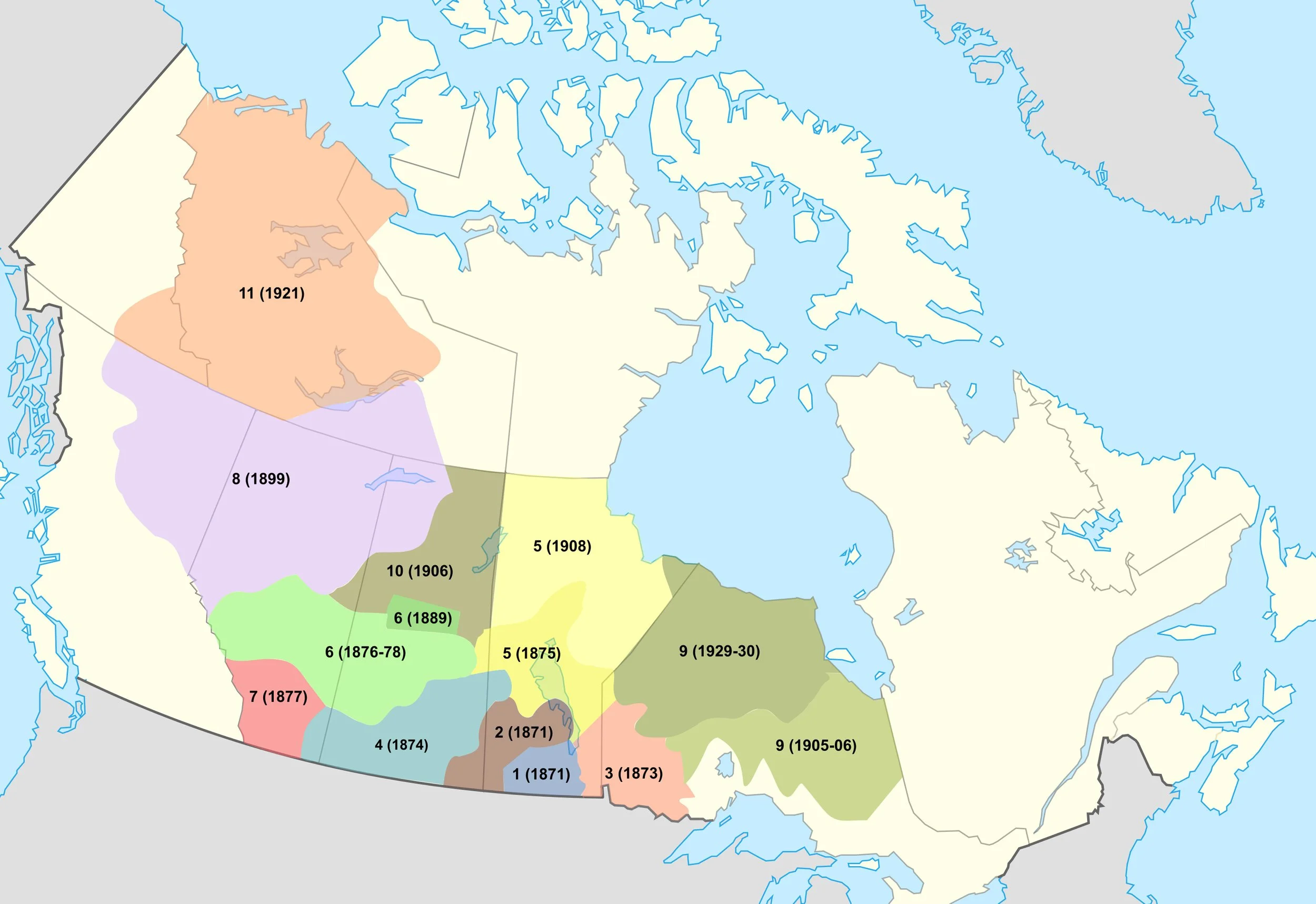

Map of the Numbered Treaties of Canada · Map by Themightyquill, based on work by Yug and STyx · Wikimedia Commons · CC BY-SA 3.0

Today’s provincial map is only one layer. These flags do not need to be as old as the relationships they represent. A treaty flag or an Indigenous nation’s flag makes those relationships visible in a space students use every day. It reminds them that their school occupies a place with histories and responsibilities extending beyond Alberta’s borders. Recognition of treaty partners should be an ordinary part of education on treaty lands.
The government presents these changes as a way to remove politics and ideology from classrooms (Government of Alberta). But acknowledging Indigenous peoples’ existence and the continuing reality of treaties is not a partisan position. These relationships are part of the geography and history of the land our schools occupy. Whose presence is considered neutral, and whose requires permission?
The Truth and Reconciliation Commission emerged from the Indian Residential Schools Settlement Agreement (National Centre for Truth and Reconciliation). Its Call to Action 62 asks governments to make education about residential schools, treaties, and Indigenous peoples’ historical and contemporary contributions mandatory from kindergarten through Grade 12 (Truth and Reconciliation Commission of Canada). How can we meaningfully teach these relationships while making their everyday visibility conditional?
This is not reconciliation. Schools cannot acknowledge Indigenous presence for a ceremony and then put it away. Email Alberta’s education minister at education.minister@gov.ab.ca, CC your MLA and our Indigenous relations minister at ir.ministeroffice@gov.ab.ca and call for these flag restrictions to be reversed, rather than simply requesting an exception. Explain why this matters to you and ask for a written response outlining what action they will take. Indigenous governments must help determine how their nations and treaty relationships are represented in schools on their territories.
Written by GAPSS VP Internal Logan Windebank
References:
Alberta Education and Childcare. (2026, October 23). Fact sheet: Flag displays in Alberta schools.
Catholic Archdiocese of Edmonton. (n.d.). Residential schools.
Crown-Indigenous Relations and Northern Affairs Canada. (n.d.). Historic treaties [Data set].
Elections Alberta. (n.d.). Land acknowledgement.
Government of Alberta. (n.d.). Removing politics and ideology from Alberta classrooms.
National Centre for Truth and Reconciliation. (n.d.). Residential school history.
Otipemisiwak Métis Government. (n.d.). History.
pflag Canada. (2026, October 26). Statement on Alberta’s school flag display regulation.
Truth and Reconciliation Commission of Canada. (2015). Truth and Reconciliation Commission of Canada: Calls to action.
-
Treaty 6 Flag · Photo by Worrypower, 2019 · Wikimedia Commons · CC BY-SA 4.0
Map of the Numbered Treaties of Canada · Map by Themightyquill, based on work by Yug and STyx · Wikimedia Commons · CC BY-SA 3.0